B4OBVIOUS · ARTICLES
Your Meeting Rooms Run Android. Unfortunately, That Doesn't Tell You Enough.
Android appliances simplified meeting rooms—but left AV managers navigating different firmware, upgrade paths and support commitments. Can MDEP change that?
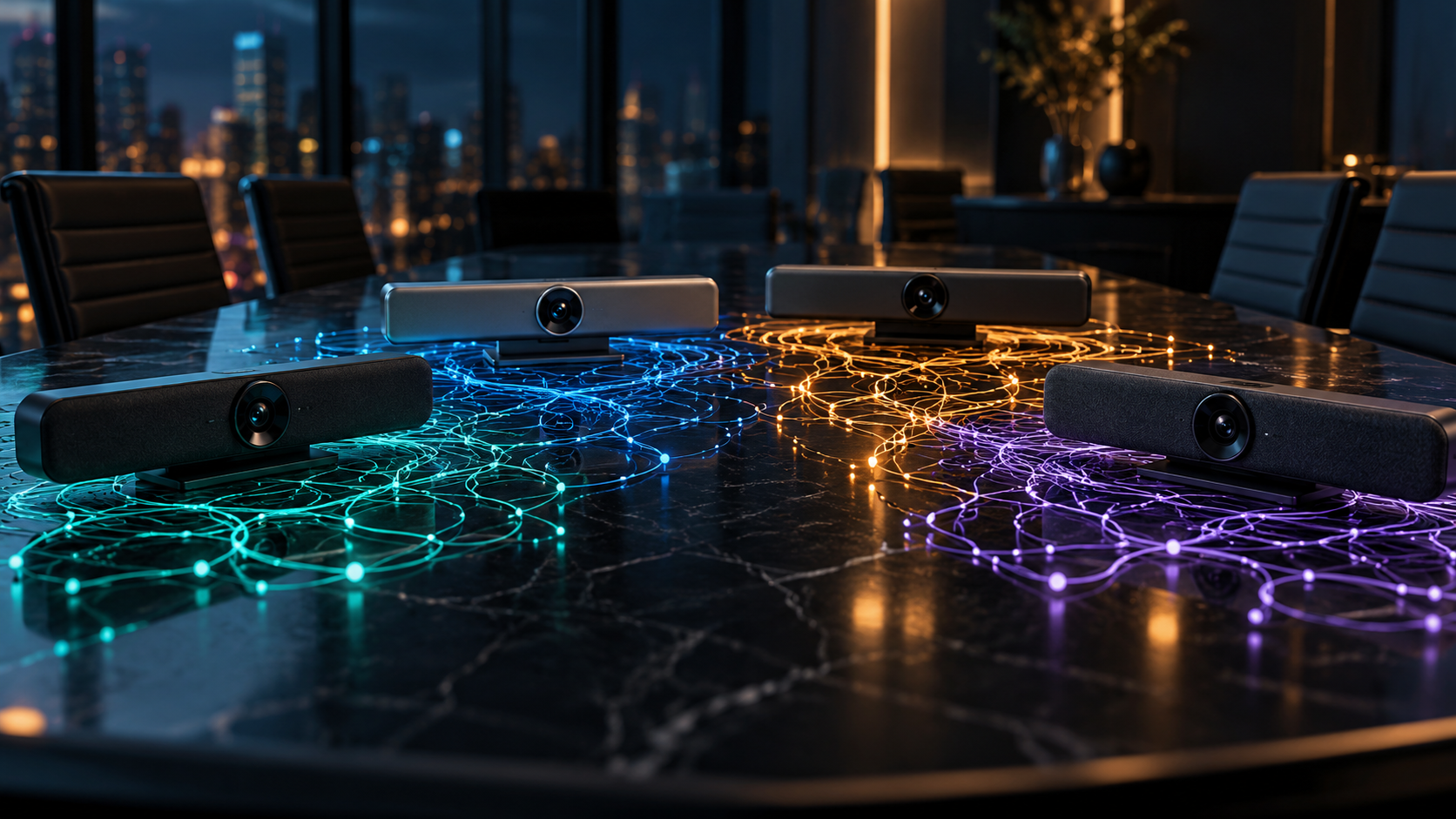
Buying a video bar should be straightforward. Choose the room size, check the camera and microphones, select your meeting platform, and install it.
Then someone from IT asks which Android version it runs, how long it will receive security updates, and who is responsible when an upgrade breaks something.
Suddenly, the camera specification becomes considerably less interesting.
“Android” has never meant that every meeting room appliance runs the same software. Manufacturers build their products using the Android Open Source Project, then integrate their own hardware support, device software and meeting applications. Microsoft's documentation describes Android operating systems and firmware as managed by the hardware manufacturers, with updates submitted for Teams certification.[1]
That flexibility helped create an attractive market. Manufacturers could develop distinctive camera framing, audio processing, accessory support and management tools. Customers gained compact appliances that could deliver a meeting without a separate room PC.
The downside was a complicated ownership chain.
The meeting application might come from Microsoft. Device firmware came from the manufacturer. Underlying capabilities depended partly on the processor and its supporting software. The customer bought one room system, but its continued usefulness depended on several organisations keeping their work aligned.
Across a mixed estate, that creates an obvious administrative burden. Similar-looking rooms can have different upgrade paths, support dates and operational requirements. For resellers, each variation becomes another thing to understand, document and support.
Certification adds another distinction. A product's certification end date and Microsoft's support end date are separate milestones. Manufacturers may extend certification by upgrading Android and recertifying a device, but buyers should verify the actual product commitment rather than assume every appliance follows the same path.[1][2]
None of this means older Android devices are automatically insecure, or that manufacturers have done a poor job. A well-maintained vendor platform can be excellent. The problem is that the word “Android” provides remarkably little reassurance about what happens five years after installation.
Microsoft's Device Ecosystem Platform, or MDEP, addresses this problem by offering manufacturers a shared Android-based foundation with enterprise security and management capabilities. Microsoft positions it as a way to reduce platform integration work while allowing partners to build differentiated products.[3]
The attraction is clear: less duplicated engineering underneath, with competition continuing above it.
The counterargument is equally reasonable. Standardisation brings dependence. If more manufacturers rely on one platform supplier, that supplier gains greater influence over their direction. A common foundation also does not automatically produce identical update schedules, support contracts or management experiences.
For AV managers, the buying conversation needs to expand beyond picture quality. Who delivers patches? What support period is guaranteed? What happens when certification changes? Can the room move to another meeting service?
For resellers, explaining those answers is increasingly part of the value proposition. A low purchase price can become expensive if lifecycle planning arrives as an unpleasant surprise.
When you buy a meeting room appliance, how much do you really know about the software commitments supporting it—and who should be accountable when those commitments run out?