
B4OBVIOUS · ARTICLES
The Best Video Bar May No Longer Be the Winning Product
MDEP can help vendors build better ecosystems while making their foundations less distinctive. The winning offer is increasingly the room that works over time.
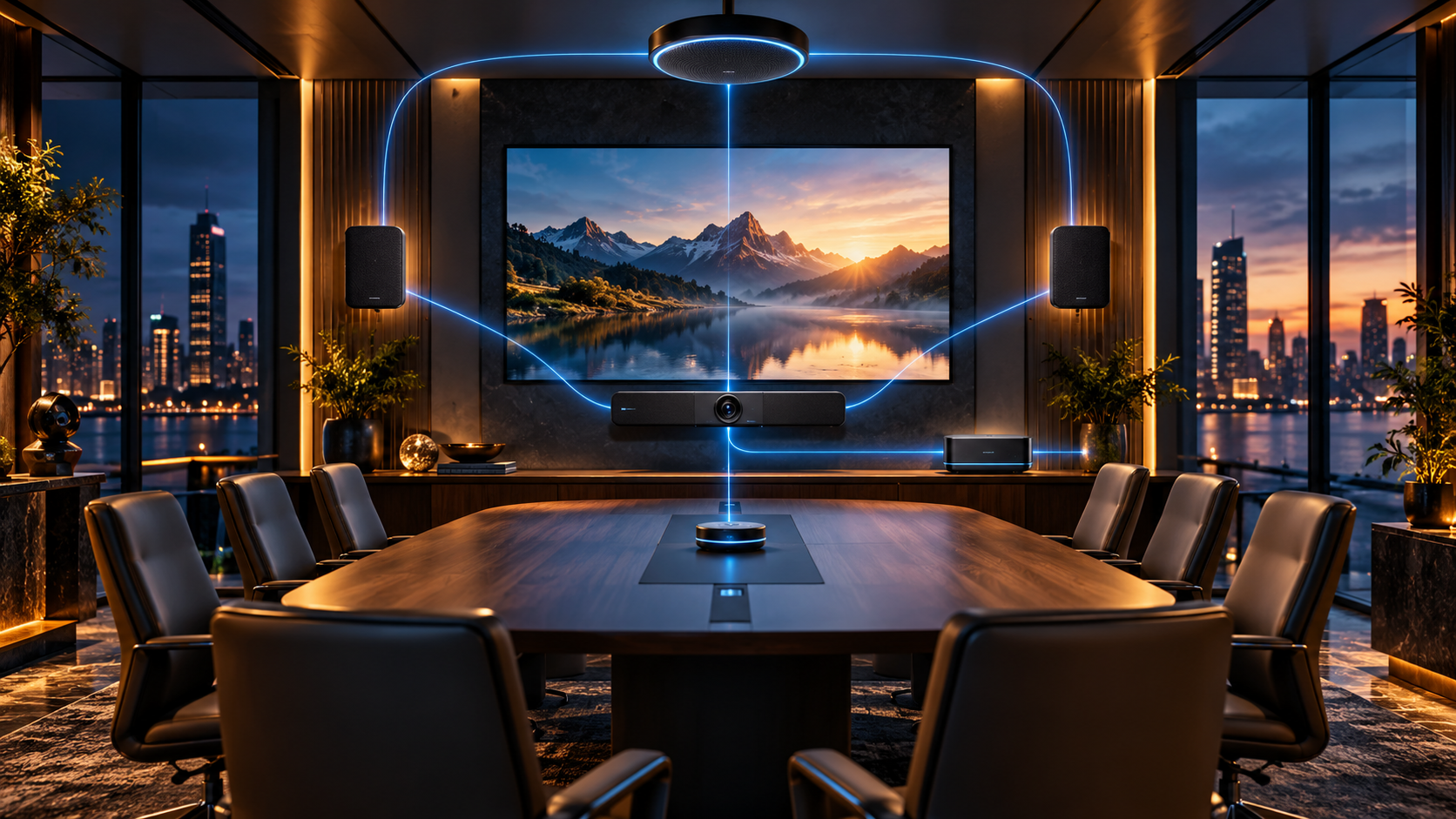
The best camera in the room can still be part of the wrong purchase.
If deployment is awkward, support is fragmented and the next software upgrade becomes a small diplomatic incident, excellent image quality offers limited consolation.
That is why the MDEP story matters beyond Logitech's latest video bar. It points toward a market in which customers increasingly judge the ecosystem surrounding a product, rather than the product in isolation.
Microsoft describes MDEP as a shared Android-based foundation combining enterprise security, management and multi-vendor choice. Manufacturers can extend it to build their own differentiated products.[1]
The potential advantage for hardware vendors is substantial. Sharing more of the foundation can reduce duplicated platform work and let engineering teams concentrate on audio, video, integration and the user experience. Smaller organisations may gain access to capabilities that would be expensive to develop independently.
For customers, the attractive outcome is a room estate that becomes easier to deploy, govern and maintain. For resellers, it is a more repeatable offer with fewer surprises after installation.
But standardisation also changes where differentiation lives.
If competitors share the same underlying platform, saying “we have an enterprise-grade foundation” becomes less persuasive as a unique selling point. Important, certainly. Exclusive, increasingly unlikely.
Vendors must demonstrate what they add: better intelligibility in difficult rooms, more useful framing, simpler commissioning, stronger fleet visibility or clearer support commitments. The common platform raises the floor; it does not decide who builds the best experience above it.
There is also a dependency problem. A vendor may gain engineering efficiency while losing some freedom over its underlying roadmap. Customers may gain hardware choice while retaining a common platform dependency.
An ecosystem can therefore help and hinder at the same time.
Its strength is coordination. Components, software and support designed to work together can reduce operational effort. Its weakness is the temptation to turn convenient integration into expensive captivity: proprietary accessories, difficult migrations and management subscriptions that become hard to escape.
Nor should “ecosystem” become a polite word for buying everything from one manufacturer. Barco's MDEP-based ClickShare Hub and Sennheiser's TeamConnect Bar demonstrate that a certified room solution can combine complementary vendors.[2]
The winning ecosystem may be a partnership, not a single brand's catalogue.
My view is that products will remain essential, but customers will increasingly select them within an operating model. The winning offer will explain how the room is installed, monitored, updated, repaired and eventually replaced—not simply how impressive it looks during a demonstration.
That shifts the reseller's role too. The opportunity is to sell a dependable outcome and remain accountable for it. Moving boxes is still a business; explaining how those boxes cooperate over several years is a more defensible one.
A brilliant product can win a comparison. A coherent ecosystem can win the deployment, the renewal and the next building.
When you choose an AV ecosystem, are you buying years of reduced operational effort—or accepting a dependency you will only discover when you try to leave?