B4OBVIOUS · ARTICLES
Your Video Bar Still Works. Its Software Clock May Have Other Ideas.
A five-to-seven-year hardware plan is only credible if software support reaches the same finish line. MDEP helps, but the badge is not the guarantee.
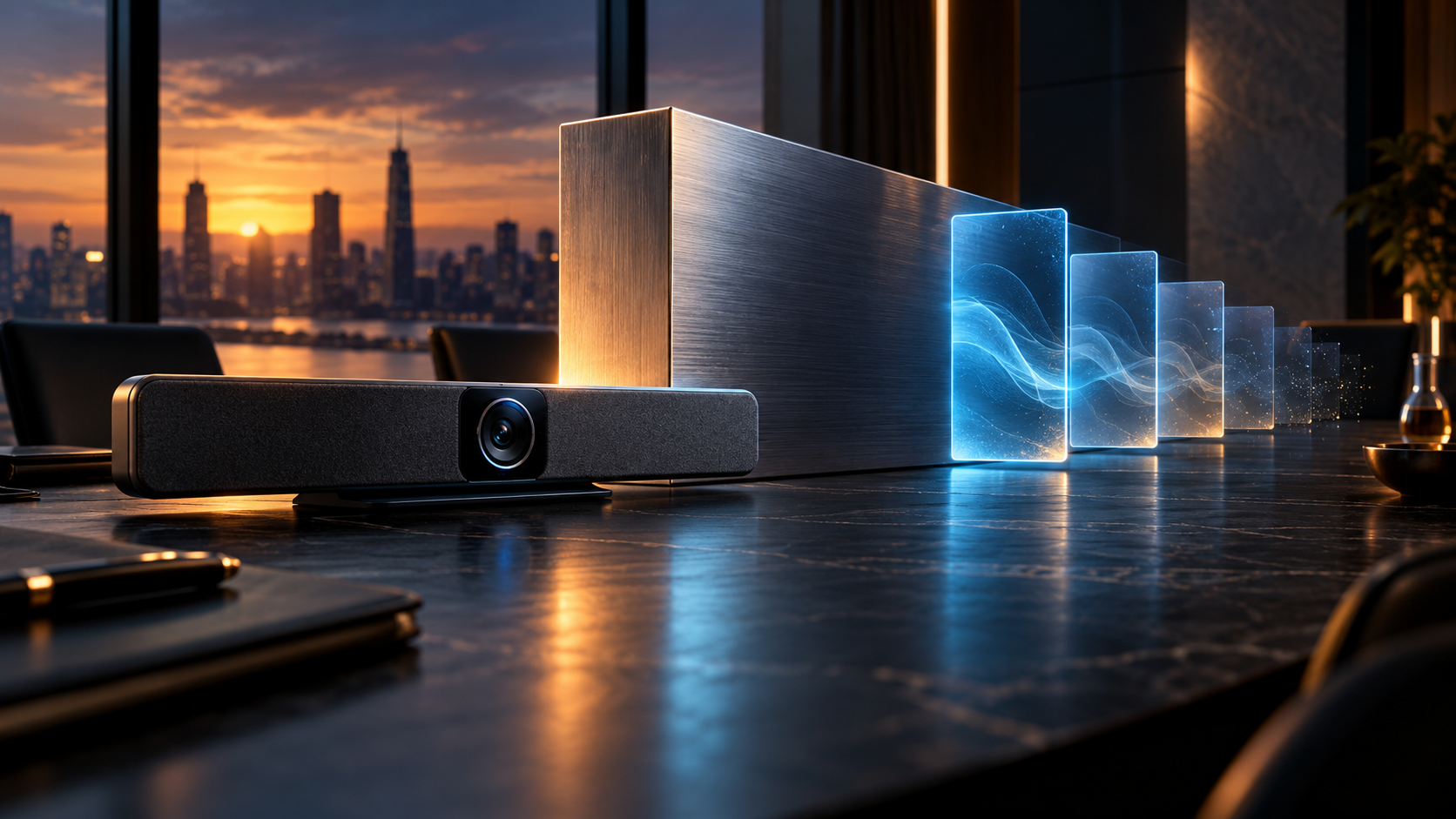
Imagine telling the finance director that a perfectly functioning video bar needs replacing because its software support has expired.
The camera works. The microphones work. Nobody has dropped it down the stairs.
Nevertheless, the organisation's operating requirements may have overtaken it. That is an uncomfortable conversation—and one procurement should anticipate before installation.
For customers planning a five-to-seven-year hardware cycle, software support must be part of the original specification. Physical durability alone cannot deliver the promised service life.
However, we should challenge one tempting assumption: Android support is not universally becoming shorter.
Microsoft has extended several Teams device support windows. Its current table lists Android 12 and 13 support through August 15, 2030, and Android 15 through October 15, 2031. Those are Microsoft Teams support dates, not guarantees of every manufacturer's security servicing or hardware support.[1]
The real problem is how much supported life remains when the customer buys.
Consider an Android 13 device purchased in October 2026, with no confirmed upgrade commitment. The published Microsoft support window ends in August 2030: less than four years away. A seven-year depreciation plan does not move that date to 2033.
Nor does a new purchase necessarily contain a newly released platform. The support clock may already be running before the reseller opens the box.
Several clocks matter: hardware serviceability, OEM firmware and security maintenance, Android upgrade capability, application support and meeting-platform certification. They overlap, but they are not interchangeable. Microsoft says maintaining certification and deciding whether to recertify a specific device are OEM responsibilities.[1]
MDEP can improve the foundation. Microsoft's long-term servicing branch provides a platform path designed for stability and extended servicing.[2] Shared engineering can make maintenance more practical, particularly compared with every manufacturer solving every underlying problem independently.
But MDEP is not a universal seven-year warranty. Buyers still need a dated, product-specific commitment. A platform feature is useful only when the manufacturer delivers and supports it in the device you purchased.
Architecture offers another trade-off.
Separating compute from cameras and audio may allow replacement of the faster-ageing component while retaining useful AV hardware, subject to compatibility and certification. Barco's modular room systems illustrate that separation.[3] Integrated appliances can simplify deployment, reduce component count and clarify support, but may require a broader replacement when their compute foundation reaches its limit.
Neither approach automatically wins. Modularity can introduce integration effort; integration can concentrate lifecycle risk.
For resellers, the opportunity is to sell a lifecycle plan alongside the room: remaining support, upgrade commitments, replacement options and realistic costs. For customers, those answers should influence valuation and procurement approval.
For vendors, longevity could become a powerful differentiator. Keeping a room secure and supported for its intended life may matter more than another impressive launch-day feature.
The ecosystem wins only if it keeps working through the years the customer paid for.
If a manufacturer expects you to buy hardware for seven years, should it have to guarantee seven years of supported operation—or tell you, before purchase, exactly which part of that promise it cannot make?
Sources
- Microsoft: Android versioning support for Teams devices
- Microsoft: MDEP long-term servicing branch announcement
- Barco: ClickShare Hub Pro modular room system
Support dates checked October 11, 2026. The purchase example assumes no subsequent OS upgrade or recertification; confirm OEM commitments for the specific device.