
B4OBVIOUS · ARTICLES
Microsoft Beneath the Meeting Room: Dominance, or Something More Complicated?
Microsoft can gain influence beneath competing meeting services. The future hinges on practical customer freedom, not just the number of hardware brands.
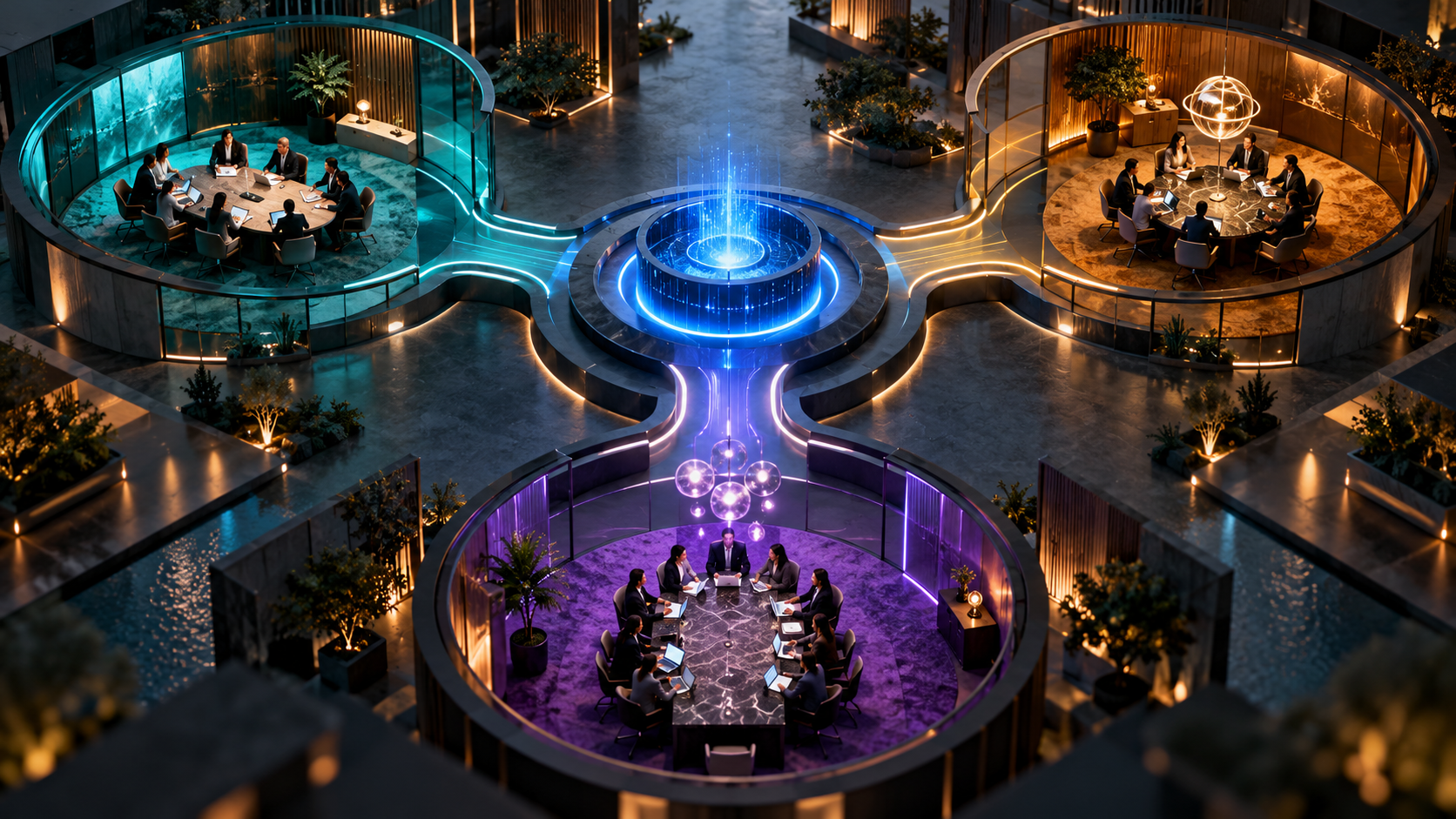
Microsoft does not need to manufacture every video bar to become more influential in meeting rooms.
If enough manufacturers adopt Microsoft's Device Ecosystem Platform, Microsoft gains a position beneath the application: a shared foundation connecting hardware, security and enterprise administration.
That could be a more consequential development than another improvement to the Teams interface.
MDEP is built on open-source Android and designed for manufacturers to extend and customise. Microsoft presents it as a consistent platform for connected devices, combining hardware-rooted trust, enterprise management and multiple hardware suppliers.[1][2]
The argument for a Microsoft-dominated future is therefore credible.
Large organisations value consistency. If their identity, security and collaboration systems already revolve around Microsoft, room devices aligned with that environment can be easier to justify. Manufacturers gain a recognised enterprise foundation. Resellers gain a more repeatable architectural story.
Success could reinforce itself. More participating vendors make the platform more attractive to buyers; more interested buyers give vendors another reason to participate.
But influence over the foundation is different from ownership of the entire experience.
MDEP does not inherently require every meeting to use Teams. Jabra explicitly states that the platform can support other services, including Zoom. Logitech lists Rally Bar 2 as certified for Teams, Zoom Rooms and Google Meet.[3][4]
That makes the future more interesting than a simple Microsoft takeover.
One plausible outcome is Microsoft becoming a widely used infrastructure supplier while meeting services continue competing above it. A customer could benefit from Microsoft's underlying security architecture while preferring another company's meeting experience.
Another possibility is a more divided market. Vendors may maintain different software configurations or platform paths to satisfy competing service providers and customer requirements. Supporting multiple meeting services does not, by itself, prove that every configuration uses identical underlying components.
A third possibility is growing standardisation without much reduction in customer complexity. Manufacturers could share more plumbing while retaining separate portals, subscription models, accessories and support processes. The architecture becomes tidier; the AV manager still has several dashboards open.
These are scenarios, not announced industry outcomes.
The strongest argument for convergence is operational efficiency. Maintaining several independent foundations costs engineering effort that could otherwise improve products.
The strongest argument against excessive convergence is concentration. A widely shared platform can create common dependencies: changes to policy, release schedules or technical requirements may affect many vendors at once. Customers can choose several hardware suppliers while still depending on the same underlying platform provider.
For resellers, that suggests an opportunity beyond selling equipment. Customers will need help distinguishing genuine portability from a compatibility logo, and shared infrastructure from shared accountability.
My expectation is greater Microsoft influence alongside continued vendor and service competition. The unresolved issue is how much practical freedom customers retain when they want to change direction.
The most revealing evidence will be operational: switching costs, firmware requirements, support commitments and the management features available outside Teams.
Would you welcome Microsoft becoming the common foundation beneath competing meeting platforms—or would that leave you with plenty of hardware choice but too little architectural independence?